
 My Inquiry
 My Account


STMicroelectronics VL6180XV0NR/1
- Part No.:
- VL6180XV0NR/1
- Manufacturer:
- STMicroelectronics
- Category:
- Distance Measuring
- Package:
- Datasheet:
-
 VL6180XV0NR/1.pdf
- Description:
- SENSOR OPTICAL 10-40CM I2C
- Quantity:
- Payment:

- Shipping:

Inventory:5,031
Please send an inquiry. Send us your inquiry, and we will respond immediately.
Product details
Overview
VL6180XV0NR/1 from STMicroelectronics is a FlightSense™ time-of-flight (ToF) optical module integrating proximity sensing, ambient light sensing (ALS), and an 850 nm VCSEL emitter in a single reflowable 4.4 mm × 2.36 mm × 1.0 mm LGA-10 package. It delivers absolute distance measurement up to 100 mm independent of target reflectance, with ALS output calibrated in lux and I²C interface support. Used in smartphone proximity detection and gesture-enabled UIs.
For engineers reviewing the VL6180XV0NR/1 datasheet, VL6180XV0NR/1 pinout, VL6180XV0NR/1 application, or VL6180XV0NR/1 equivalent, key selection considerations include its reflectance-independent ranging accuracy, dual-sensor integration (proximity + ALS), programmable GPIO interrupt thresholds, low-power continuous/interleaved measurement modes, and documented C API for rapid firmware integration.
Technical Context
The VL6180X implements a direct ToF architecture measuring light round-trip time rather than reflected intensity, enabling object distance determination unaffected by surface color or albedo. Its ranging pipe includes cross-talk compensation, early convergence estimation, and DMAX auto-adjustment based on ambient conditions.
It supports four operating modes-polling, interrupt, asynchronous, and interleaved-with configurable inter-measurement periods (10 ms to 1 s), ALS integration times (10–700 ms), and programmable gain (1× to 40×). Two GPIO pins provide windowed threshold interrupts for both ranging and ALS events without host polling.
Key Specifications
| Parameter | Value and Actual Design Meaning |
|---|---|
| Max Ranging Distance | 100 mm absolute range, independent of object reflectance - enables reliable proximity detection on black/dark surfaces where conventional IR sensors fail. |
| ALS Dynamic Range | 0.01–100,000 lux - supports operation from near-total darkness to direct sunlight, with factory-calibrated lux output. |
| VCSEL Wavelength | 850 nm - eye-safe Class 1 laser emission compliant with IEC 60825-1, suitable for consumer device integration without shielding. |
| I²C Interface Speed | Standard mode (100 kHz) and fast mode (400 kHz) - compatible with most microcontrollers and allows efficient register access for real-time control. |
| Supply Voltages | AVDD = 2.6–3.3 V; AVDD_VCSEL = 2.6–3.3 V - single-supply design simplifies power rail layout and eliminates need for separate VCSEL bias circuitry. |
| Operating Temperature | −20 °C to +70 °C - validated for use in portable electronics enclosures with internal thermal gradients. |
| Package | LGA-10, 4.4 mm × 2.36 mm × 1.0 mm - surface-mount, reflow-compatible footprint requiring no external optics or mechanical alignment. |
Pinout & Package
The VL6180XV0NR/1 uses a 10-pin LGA (Land Grid Array) package with exposed thermal pad. All pins are arranged on a 0.5 mm pitch grid; the bottom-side thermal pad must be soldered for optimal thermal performance and EMI suppression.
| Pin/Terminal | Circuit Role | Design Meaning |
|---|---|---|
| VDD_IO | Digital I/O supply | Supplies logic-level circuitry (I²C interface, registers); must be decoupled with 100 nF capacitor near pin. |
| SDA | I²C data line | Open-drain bidirectional signal; requires external pull-up (typically 4.7 kΩ to VDD_IO). |
| SCL | I²C clock line | Open-drain input; synchronized with SDA for register read/write and configuration. |
| GPIO1 | Programmable interrupt output | Configurable as ALS or ranging threshold interrupt; active-low, open-drain output. |
| GPIO0 | Programmable interrupt output | Independent of GPIO1; supports windowed or level-triggered event signaling per sensor domain. |
| GND | Analog/digital ground | Common reference for all circuits; must be connected to thermal pad for noise immunity. |
| AVDD | Analog core supply | Power for ToF timing circuitry and ALS photodiode front-end; requires low-noise 1 µF + 100 nF decoupling. |
| AVDD_VCSEL | VCSEL driver supply | Directly powers the 850 nm emitter; shares voltage range with AVDD but must be independently filtered. |
| INT | Interrupt status indicator | Combines GPIO0/GPIO1 outputs into single interrupt flag; optional use reduces MCU pin count. |
| NC | No connect | Unbonded pad; left floating or tied to GND per layout best practices - no electrical function. |
Key Features
| Feature | Design Value |
|---|---|
| FlightSense™ ToF ranging | Measures absolute distance via time-of-flight, eliminating reflectance dependency - critical for consistent performance across diverse materials (e.g., black plastic, glass, skin). |
| Integrated VCSEL + ALS + range sensor | Single-component solution replaces discrete emitter/sensor/optics stack - reduces BOM count, PCB area, and calibration effort. |
| Programmable dual-GPIO interrupt logic | Enables autonomous host wake-up on proximity entry/exit or ALS lux crossing thresholds - extends battery life in always-on sensing applications. |
| Factory-calibrated lux output | ALS data delivered in SI lux units without host-side conversion - accelerates compliance testing and UI brightness adaptation. |
| C-portable API support | ST-provided ANSI-C library abstracts register access and timing sequences - cuts firmware development time for embedded systems. |
Applications
| Smartphone Proximity Detection | Tablet Gesture Interface |
|---|---|
Use Scenario: Detecting user's ear during phone calls to disable touchscreen and backlight. IC Role / Device Role / Timing Role: Primary proximity sensor providing sub-100 ms response latency and 0–100 mm absolute ranging to prevent false triggers from pocket or bag. Use Value: Eliminates reliance on reflectance-based IR sensors that misread dark clothing or curved surfaces - improves call reliability and reduces accidental screen activation. | Use Scenario: Enabling swipe-to-wake or hover-based navigation in tablets without physical touch. IC Role / Device Role / Timing Role: Dual-mode operation: continuous ranging at 10 Hz + ALS monitoring at 1 Hz to distinguish intentional gestures from ambient motion. Use Value: Combines precise short-range ToF data with ambient light context to reject false positives caused by lighting changes or background movement. |
| Industrial Panel PC Presence Sensing | Home Appliance Touchless Control |
Use Scenario: Activating HMI displays only when operator is within 30 cm, reducing power consumption in factory environments. IC Role / Device Role / Timing Role: Low-power interleaved mode (ranging + ALS alternated every 500 ms) maintains system awareness while drawing <12 µA average current. Use Value: Extends display backlight lifetime and lowers thermal load in sealed enclosures - validated over −20 °C to +70 °C operating range. | Use Scenario: Controlling oven or microwave functions via hand wave above control panel. IC Role / Device Role / Timing Role: Uses GPIO0 for proximity window interrupt (5–20 cm) and GPIO1 for ALS ambient change detection to suppress false triggers under varying kitchen lighting. Use Value: Enables hygienic, contactless interaction without requiring user calibration - robust against steam, grease film, or cover glass contamination. |
Equivalent & Alternatives
The following parts are listed as comparable options for similar proximity and ambient light sensing applications.
| Alternative Part | Technical Difference | Application Difference | Selection Advice |
|---|---|---|---|
| VL53L0XV0FT/1 | Extended ranging range (up to 2 m), higher resolution (1 mm), but larger 4.4 mm × 4.2 mm package and higher power consumption in continuous mode. | Better suited for robotics or industrial automation where longer range is required; less optimal for space-constrained mobile devices. | Select when >100 mm range or millimeter-level precision is mandatory; accept trade-offs in size and quiescent current. |
| APDS-9960 | Uses photodiode-based proximity (reflectance-dependent), no integrated VCSEL; ALS range limited to 0.01–10,000 lux; I²C-only interface with no GPIO interrupts. | Lower cost and simpler integration for basic presence detection, but fails on low-reflectance targets and lacks gesture robustness in variable lighting. | Choose only for cost-sensitive, non-critical proximity tasks where surface uniformity is guaranteed and ambient light is controlled. |
Compared with VL53L0XV0FT/1, the VL6180XV0NR/1 offers superior size efficiency and lower system-level power in short-range (<100 mm) applications, while APDS-9960 lacks ToF accuracy and environmental resilience - making VL6180X the balanced choice for consumer UIs demanding reliability, compactness, and calibrated ALS.
Availability
VL6180XV0NR/1 is available at Aetrix Electronics and suitable for smartphone proximity detection, tablet gesture interfaces, and home appliance touchless controls requiring stable component supply across high-volume production cycles.
Supply support for VL6180XV0NR/1 includes scheduled delivery planning, volume procurement assistance, BOM continuity management, traceable sourcing, and lifecycle availability coordination for OEM customers, industrial embedded developers, connected-device designers, and electronics production programs.
Manufacturer
STMicroelectronics is a global semiconductor leader headquartered in Geneva, Switzerland, designing and manufacturing microcontrollers, sensors, power ICs, and automotive-grade components since 1987.
The VL6180X belongs to ST's FlightSense™ optical sensing product line, engineered specifically for reflectance-invariant proximity and ambient light measurement in space-constrained, battery-powered consumer electronics.
FAQ
What is the maximum measurable distance of the VL6180XV0NR/1?
The VL6180XV0NR/1 achieves a maximum absolute ranging distance of 100 mm under typical indoor ambient light conditions (≤10 klux). Performance beyond 10 cm depends on target reflectance, cover glass thickness, and ambient illumination - ST specifies worst-case max range as 60 mm at 100 klux ambient light per datasheet Table 19.
Does the VL6180XV0NR/1 require external optical components?
No. The VL6180XV0NR/1 integrates a VCSEL emitter, SPAD-based ToF sensor, and photodiode ALS detector in a single LGA-10 package with molded optics. No external lenses, filters, or diffusers are needed - it is designed for direct placement behind cover glass with minimal air gap.
How is ambient light measured and reported by this device?
The VL6180XV0NR/1 performs ALS measurements using a dedicated photodiode with programmable gain (1×–40×) and integration time (10–700 ms). Raw counts are converted internally to calibrated lux values using factory-stored coefficients, accessible via the RESULT__ALS_VAL register and exposed as integer lux in the C API.
Can the VL6180XV0NR/1 operate without a microcontroller?
No. The VL6180XV0NR/1 is a slave device requiring I²C host control for initialization, mode configuration, and data retrieval. It does not contain embedded firmware for autonomous operation - all ranging/ALS sequencing, interrupt handling, and data processing must be managed by an external MCU using ST's provided C API or custom register-level drivers.
VL6180XV0NR/1 Specifications
- Product attributes
- Attribute value
- Manufacturer:
- STMicroelectronics
- Series:
- FlightSense™
- Packaging:
- Tape & Reel (TR)
- Product Status:
- Last Time Buy
- Sensing Distance:
- 0 ~ 24.41" (0 ~ 62cm)
- Output Type:
- I2C
- Voltage - Supply:
- 2.6V ~ 3V
- Operating Temperature:
- -
- Current - Supply:
- -
- Voltage - Output Difference (Typ) @ Distance:
- -
- Voltage - Output (Typ) @ Distance:
- -10°C ~ 60°C
VL6180XV0NR/1 FAQ
1.How can I place an order for VL6180XV0NR/1 through Aetrix?
Please submit a Request for Quotation (RFQ) for VL6180XV0NR/1 on Aetrix. Our sales agent will provide a competitive quotation and guide you through the order confirmation once you accept the terms.
2.Are the price and stock information for VL6180XV0NR/1 reliable?
The price and inventory of VL6180XV0NR/1 are updated periodically and may fluctuate due to market conditions. Stock and pricing data are typically refreshed every 24 hours. Quotation validity for VL6180XV0NR/1 is usually 5 days.
3.What payment methods are accepted for VL6180XV0NR/1?
We accept Wire Transfer, PayPal, Credit Card, Western Union, MoneyGram, and Escrow for VL6180XV0NR/1 transactions.
Note: Certain payment methods may incur a processing fee.
4.How is shipping managed for VL6180XV0NR/1?
VL6180XV0NR/1 orders can be shipped via leading logistics carriers, including DHL, UPS, FedEx, TNT, or Registered Mail.
Once your VL6180XV0NR/1 order is processed, you will receive an email with the shipment details and tracking number.
Note: Tracking information may take up to 24 hours to appear. Express delivery typically takes 3–5 business days.
5.How can I obtain technical support or documentation for VL6180XV0NR/1?
For technical support, including VL6180XV0NR/1 datasheets, pinout diagrams, or application guidance, please contact our engineering support team. They can provide detailed documentation and assistance for your VL6180XV0NR/1 requirements.
6.How does Aetrix verify that VL6180XV0NR/1 is sourced from the original manufacturer or authorized distributors?
All VL6180XV0NR/1 products on Aetrix are procured from qualified distributors and authorized channels. Our dedicated quality assurance team conducts strict verification, including traceability checks and, if necessary, third-party testing. This ensures that VL6180XV0NR/1 meets industry standards.
7.What is the process for return or replacement of VL6180XV0NR/1?
All VL6180XV0NR/1 units undergo pre-shipment inspection (PSI). If there is an issue with VL6180XV0NR/1, returns or replacements are accepted under the following conditions:
1.Quantity discrepancies, incorrect items, or visible external defects (such as breakage or corrosion), acknowledged by Aetrix.
2.The issue is reported within 90 days of delivery.
3.The VL6180XV0NR/1 part is unused and in its original packaging.
Return procedure for VL6180XV0NR/1:
1.Submit a request within 90 days.
2.Obtain a Return Material Authorization (RMA) from Aetrix.
VL6180XV0NR/1 Tags
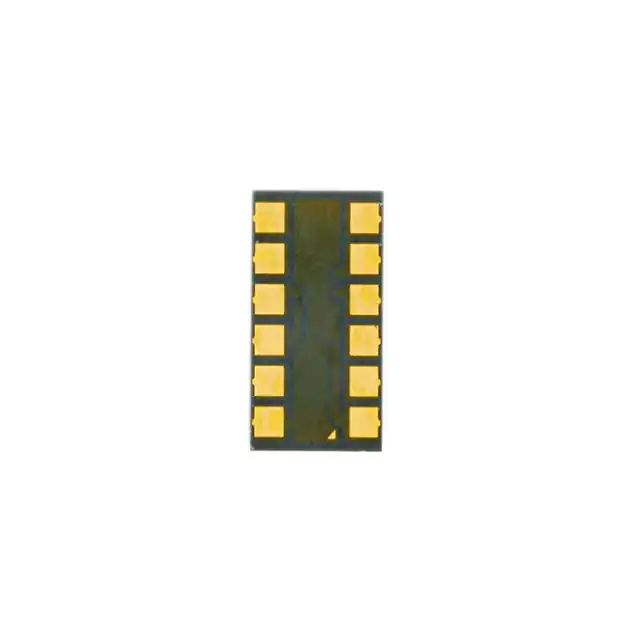
-
VL6180V1NR/1
STMicroelectronics

-
VL6180XV0NR/1
STMicroelectronics
-
VL53L4CDV0DH/1
STMicroelectronics
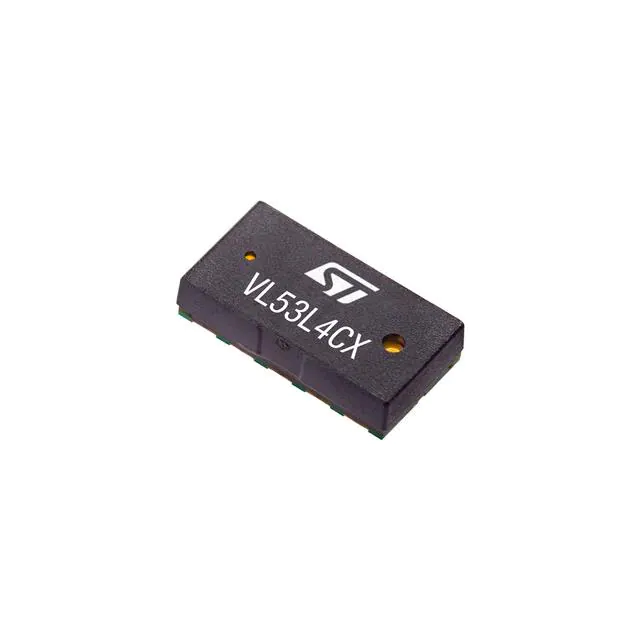
-
VL53L4CXV0DH/1
STMicroelectronics
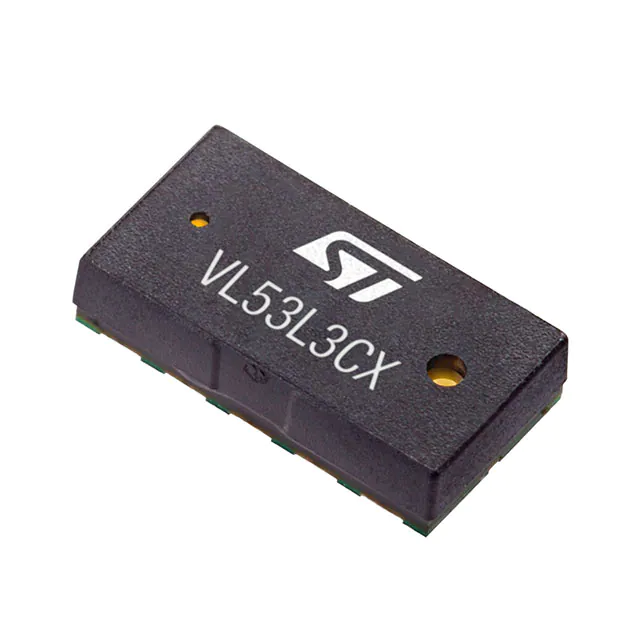
-
VL53L3CXV0DH/1
STMicroelectronics
-
VL53L0CXV0DH/1
STMicroelectronics
-
VL53L1CXV0FY/1
STMicroelectronics
-
VL53L1CBV0FY/1
STMicroelectronics
-
GP2Y0A51SK0F
SHARP/Socle Technology
-
TMF8820-1AM
ams-OSRAM USA INC.
-
VL53L7CXV0GC/1
STMicroelectronics
-
VL53L5CXV0GC/1
STMicroelectronics
Tech Hub

Operational amplifier guide covering op amp basics, feedback, ideal vs real op amps, common configurations, buffer circuits, offset, bias current, gain-bandwidth, slew rate, rail-to-rail limits and sel…

Jumper cables guide covering safe connection order, red and black clamp placement, final ground connection, cable gauge, length, clamp quality, copper vs CCA cables, jump starter comparison and battery…

LDO regulator guide covering low dropout voltage, power dissipation, thermal design, PSRR, output noise, capacitor stability, adjustable LDO circuits, LDO vs buck converter and datasheet selection chec…

Conditional Access Module guide covering CAM meaning, CI/CI+ interface, smart card authorization, DVB security workflow, TV and set-top box compatibility, internal electronics, ESD protection, connecto…

Guide to electronic component obsolescence covering EOL risk, PCN/PDN notices, last-time buy planning, replacement options, form-fit-function validation, counterfeit risk and BOM lifecycle management.

18650 battery guide covering lithium-ion cell basics, 3.6V/3.7V voltage, 4.2V charging, mAh and Wh capacity, protected cells, chargers, BMS, series-parallel packs, holders, welding and sourcing checks.…

Hall effect sensor guide covering working principle, linear and digital sensors, Arduino circuits, current sensing, speed detection, automotive applications, A3144 examples, signal filtering and datash…

Product Change Notification guide for electronic components, covering PCN meaning, PCN vs PDN/EOL, common change types, risk levels, form-fit-function review, engineering validation, BOM control, LTB/L…

A practical guide to blend door actuators, covering HVAC function, symptoms, location, AC and heater issues, reset and calibration, replacement cost, electrical diagnosis, compatibility checks, and rep…

Engineering guide to Raspberry Pi alternatives, covering chip-level differences, Orange Pi, ROCK, Jetson, Banana Pi, NanoPi, Compute Module, Pico, GPIO, camera, HAT compatibility, and replacement risks…


