
 My Inquiry
 My Account


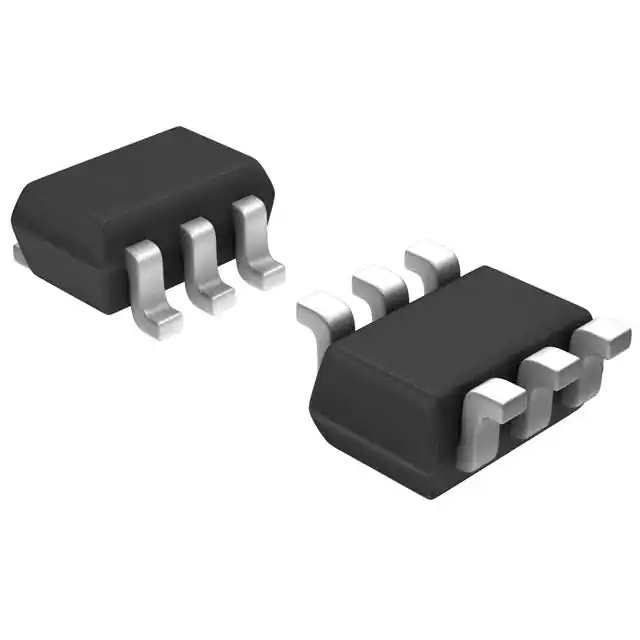
Infineon Technologies BFR 360T E6327
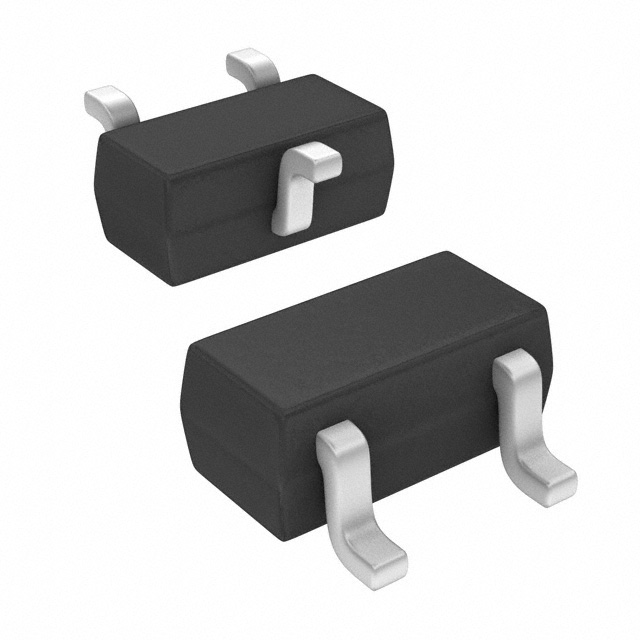
- Part No.:
- BFR 360T E6327
- Manufacturer:
- Infineon Technologies
- Category:
- Bipolar RF Transistors
- Package:
- SC-75, SOT-416
- Datasheet:
-
 BFR 360T E6327.pdf
- Description:
- RF TRANS NPN 9V 14GHZ SC75
- Quantity:
- Payment:

- Shipping:

Inventory:3,209
Please send an inquiry. Send us your inquiry, and we will respond immediately.
Product details
Overview
BFR 360T E6327 from Infineon Technologies is an NPN silicon RF transistor optimized for low-noise amplifier and oscillator stages up to 3.5 GHz, with a typical noise figure of 1.0 dB at 1.8 GHz, fT of 14 GHz, P1dB of 9 dBm, and maximum available gain of 13.5 dB at 1.8 GHz - deployed in GPS L1 front-ends and UMTS band 1 low-noise receive chains.
For engineers reviewing the BFR 360T E6327 datasheet, BFR 360T E6327 pinout, BFR 360T E6327 application, or BFR 360T E6327 equivalent, key selection criteria include verified 1.0 dB Fmin at 1.8 GHz, SC75 package thermal resistance (RthJS = 325 K/W), 6 V VCEO, 35 mA IC, and SPICE model availability for RF circuit simulation.
Technical Context
This device employs a high-frequency optimized epitaxial NPN structure with sub-micron emitter geometry, enabling operation up to 3.5 GHz with stable transducer gain (|S21|² = 12 dB at 1.8 GHz) and third-order intercept point (IP3 = 25 dBm) under matched 50 Ω conditions. Its Gummel-Poon SPICE model includes calibrated parasitic inductances (L1 = 0.762 nH, L2 = 0.706 nH) and capacitances (Ccb = 0.34 pF typ., Ceb = 0.4 pF) for accurate small-signal and large-signal behavioral prediction.
The transistor operates in common-emitter configuration with DC biasing requiring VCE ≤ 3 V and IC = 3–15 mA for optimal noise performance; its ESD sensitivity (HBM Class 1B) mandates grounded wrist straps and conductive foam handling during PCB assembly and test.
Key Specifications
| Parameter | Value and Actual Design Meaning |
|---|---|
| VCEO | 6 V - Maximum safe collector-emitter voltage before breakdown under open-base condition; sets upper limit for supply rail in LNA bias networks. |
| fT | 14 GHz typ. - Unity-gain frequency confirming usable gain beyond 3.5 GHz oscillator design; enables stable amplification in GPS L1 (1.575 GHz) and LTE Band 1 (2.1 GHz) paths. |
| Fmin | 1.0 dB at 1.8 GHz - Minimum achievable noise figure under conjugate match; critical for receiver sensitivity in cellular baseband front-ends. |
| P1dB | 9 dBm - Output power at 1 dB compression; defines linear operating range for low-distortion signal amplification in narrowband receivers. |
| RthJS | 325 K/W - Junction-to-soldering-point thermal resistance; determines temperature rise per mW dissipated in SC75 footprint, guiding heatsinking decisions on FR4 PCBs. |
| Ccb | 0.34 pF typ. - Collector-base junction capacitance at 5 V; directly impacts Miller effect and stability margin in broadband amplifier designs. |
| hFE | 130 typ. at IC = 15 mA - DC current gain used for bias network calculation and base drive sizing in fixed-bias or emitter-degenerated configurations. |
Pinout & Package
Package: SC75 (SOT-323), 3-pin plastic surface-mount package with standard lead pitch of 0.65 mm and body dimensions 2.0 × 1.25 × 0.95 mm. Thermal pad not present; soldering performed only on three terminals.
| Pin/Terminal | Circuit Role | Design Meaning |
|---|---|---|
| 1 | Base (B) | Control electrode for carrier injection; requires impedance-matched input network (e.g., microstrip stub or LC matching) to achieve ZSopt for minimum noise. |
| 2 | Emitter (E) | Current sink node; typically AC-grounded via low-inductance bypass capacitor (≤ 100 pF) to minimize feedback path in common-emitter topology. |
| 3 | Collector (C) | Output node; connected to output matching network and DC feed choke; layout must minimize parasitic inductance to preserve gain above 1 GHz. |
Key Features
| Feature | Design Value |
|---|---|
| Low-noise operation | Fmin = 1.0 dB at 1.8 GHz enables < −110 dBm receiver sensitivity in 200 kHz bandwidth UMTS applications. |
| High-frequency gain | Gma = 13.5 dB at 1.8 GHz supports single-stage LNA architectures without cascading, reducing component count and board area. |
| SPICE-model ready | Complete Gummel-Poon parameters provided - including package parasitics (L1–L3, C1–C6) - for accurate harmonic balance and transient simulation in ADS or Cadence. |
| ESD-protected handling | HBM Class 1B rating (≥ 200 V) confirmed; requires IEC 61340-5-1 compliant workstation setup during manual placement and reflow. |
Applications
| GPS L1 Front-End LNA | UMTS Band 1 Receive Amplifier |
|---|---|
Use Scenario: Low-noise amplification of 1.575 GHz GPS signals prior to downconversion in handheld navigation devices. IC Role / Device Role / Timing Role: Single-stage common-emitter LNA configured for minimum noise figure using source inductor degeneration and microstrip matching. Use Value: Achieves system NF ≤ 1.5 dB with 15 dB gain, meeting GPS receiver sensitivity requirement of −142 dBm. | Use Scenario: First-stage amplification in 3G base station femtocell receivers operating in 1920–1980 MHz uplink band. IC Role / Device Role / Timing Role: Fixed-bias LNA with 50 Ω input/output matching for integration into compact SAW-filter-coupled RF module. Use Value: Delivers 12 dB transducer gain and IP3 = 25 dBm, supporting adjacent-channel rejection > 60 dB in multi-user environments. |
| ISM Band 2.4 GHz Oscillator | Wi-Fi 2.4 GHz PA Driver |
Use Scenario: Colpitts oscillator core generating stable 2.4 GHz clock for Bluetooth LE transceivers. IC Role / Device Role / Timing Role: Active device in parallel-resonant tank circuit with varactor tuning; biased at IC = 5 mA for phase noise optimization. Use Value: Enables −110 dBc/Hz phase noise at 100 kHz offset, satisfying Bluetooth SIG spectral mask requirements. | Use Scenario: Driver stage preceding GaAs pHEMT final PA in IEEE 802.11b/g access point RF front-end. IC Role / Device Role / Timing Role: Medium-power gain block delivering 9 dBm P1dB into 50 Ω load, with interstage matching to maximize power transfer. Use Value: Provides 10 dB gain with < 3% AM-AM distortion at 2.44 GHz, ensuring OFDM symbol integrity in 54 Mbps transmission. |
Equivalent & Alternatives
The following parts are listed as comparable options for similar NPN RF transistor applications.
| Alternative Part | Technical Difference | Application Difference | Selection Advice |
|---|---|---|---|
| BFP 640F E6327 | fT = 25 GHz, Fmin = 0.85 dB at 1.8 GHz, RthJS = 290 K/W, SC75 same | Higher gain and lower noise support tighter phase noise specs in 5G NR FR1 oscillators | Select when ≥ 15 dB Gma or sub-1 dB Fmin required; higher cost and tighter layout tolerance. |
| MRF581 T1 | fT = 8 GHz, Fmin = 1.3 dB at 1.8 GHz, VCEO = 12 V, SOT-23 package | Higher voltage rating allows direct integration with 5 V supply rails; larger package eases hand-soldering | Prefer for prototyping or industrial-grade 5 V systems where 0.3 dB NF penalty is acceptable. |
Compared with BFR 360T E6327, BFP 640F E6327 offers superior high-frequency linearity and noise performance but demands stricter layout control, while MRF581 T1 trades noise and speed for robustness and ease of integration in non-portable 5 V platforms.
Availability
BFR 360T E6327 is available at Aetrix Electronics and suitable for GPS front-ends, UMTS femtocell receivers, and 2.4 GHz ISM oscillator designs requiring stable component supply across production volumes from prototype to volume manufacturing.
Supply support for BFR 360T E6327 includes scheduled delivery planning, volume procurement assistance, BOM continuity management, traceable sourcing, and lifecycle availability coordination for OEM customers, industrial embedded developers, connected-device designers, and electronics production programs.
Manufacturer
Infineon Technologies is a German semiconductor manufacturer specializing in power management, automotive ICs, and high-performance discrete devices, with global R&D centers and ISO/TS 16949-certified wafer fabs.
The BFR 360T E6327 belongs to Infineon's BFR series of silicon RF transistors, designed specifically for cost-sensitive, high-volume wireless infrastructure and consumer RF front-end applications below 4 GHz.
FAQ
What is the recommended DC bias condition for minimum noise figure?
For Fmin = 1.0 dB at 1.8 GHz, bias at IC = 3 mA and VCE = 3 V with emitter inductor degeneration (≈ 1.2 nH) and base resistive termination (≈ 100 Ω) is specified. This matches ZSopt ≈ 12 + j15 Ω and ensures stable operation without oscillation under typical PCB parasitics.
Can BFR 360T E6327 be used in Class-C oscillator configurations?
Yes - its fT = 14 GHz and low Ccb support reliable Class-C operation up to 3.5 GHz. Application Note AN2003-07 confirms stable 2.4 GHz Colpitts oscillation with Pout > 10 dBm and phase noise of −108 dBc/Hz at 100 kHz offset when biased at IC = 8 mA and VCE = 4.5 V.
Is the SPICE model compatible with Keysight ADS and Cadence Spectre?
Yes - the provided Gummel-Poon model uses Berkeley SPICE 2G.6 syntax and has been validated in both Keysight ADS (v2022) and Cadence Spectre (v21.1). All 38 parameters, including package inductors (L1–L3) and capacitors (C1–C6), are pre-scaled and require no modification for transient or harmonic balance simulation.
What is the maximum allowable reflow peak temperature for SC75 package?
The SC75 package supports JEDEC J-STD-020D-compliant lead-free reflow with peak temperature of 260 °C for ≤ 30 seconds. Board layout must avoid thermal vias directly under the die pad area, as the package lacks an exposed thermal slug and relies on lead-frame conduction through pins 1–3.
BFR 360T E6327 Specifications
- Product attributes
- Attribute value
- Manufacturer:
- Infineon Technologies
- Series:
- -
- Package/Case:
- SC-75, SOT-416
- Packaging:
- Tape & Reel (TR)
- Product Status:
- Discontinued at Digi-Key
- Transistor Type:
- NPN
- Voltage - Collector Emitter Breakdown (Max):
- 9V
- Frequency - Transition:
- 14GHz
- Noise Figure (dB Typ @ f):
- 1dB @ 1.8GHz
- Gain:
- 13.5dB
- Power - Max:
- 210mW
- DC Current Gain (hFE) (Min) @ Ic, Vce:
- 60 @ 15mA, 3V
- Current - Collector (Ic) (Max):
- 35mA
- Operating Temperature:
- 150°C (TJ)
- Grade:
- -
- Qualification:
- -
- Mounting Type:
- Surface Mount
- Supplier Device Package:
- PG-SC75-3D
BFR 360T E6327 FAQ
1.How can I place an order for BFR 360T E6327 through Aetrix?
Please submit a Request for Quotation (RFQ) for BFR 360T E6327 on Aetrix. Our sales agent will provide a competitive quotation and guide you through the order confirmation once you accept the terms.
2.Are the price and stock information for BFR 360T E6327 reliable?
The price and inventory of BFR 360T E6327 are updated periodically and may fluctuate due to market conditions. Stock and pricing data are typically refreshed every 24 hours. Quotation validity for BFR 360T E6327 is usually 5 days.
3.What payment methods are accepted for BFR 360T E6327?
We accept Wire Transfer, PayPal, Credit Card, Western Union, MoneyGram, and Escrow for BFR 360T E6327 transactions.
Note: Certain payment methods may incur a processing fee.
4.How is shipping managed for BFR 360T E6327?
BFR 360T E6327 orders can be shipped via leading logistics carriers, including DHL, UPS, FedEx, TNT, or Registered Mail.
Once your BFR 360T E6327 order is processed, you will receive an email with the shipment details and tracking number.
Note: Tracking information may take up to 24 hours to appear. Express delivery typically takes 3–5 business days.
5.How can I obtain technical support or documentation for BFR 360T E6327?
For technical support, including BFR 360T E6327 datasheets, pinout diagrams, or application guidance, please contact our engineering support team. They can provide detailed documentation and assistance for your BFR 360T E6327 requirements.
6.How does Aetrix verify that BFR 360T E6327 is sourced from the original manufacturer or authorized distributors?
All BFR 360T E6327 products on Aetrix are procured from qualified distributors and authorized channels. Our dedicated quality assurance team conducts strict verification, including traceability checks and, if necessary, third-party testing. This ensures that BFR 360T E6327 meets industry standards.
7.What is the process for return or replacement of BFR 360T E6327?
All BFR 360T E6327 units undergo pre-shipment inspection (PSI). If there is an issue with BFR 360T E6327, returns or replacements are accepted under the following conditions:
1.Quantity discrepancies, incorrect items, or visible external defects (such as breakage or corrosion), acknowledged by Aetrix.
2.The issue is reported within 90 days of delivery.
3.The BFR 360T E6327 part is unused and in its original packaging.
Return procedure for BFR 360T E6327:
1.Submit a request within 90 days.
2.Obtain a Return Material Authorization (RMA) from Aetrix.
BFR 360T E6327 Tags
-
BFR182WH6327XTSA1
Infineon Technologies
-
BFR92PE6327HTSA1
Infineon Technologies
-
BFR360FH6327XTSA1
Infineon Technologies
-
BFR193FH6327XTSA1
Infineon Technologies
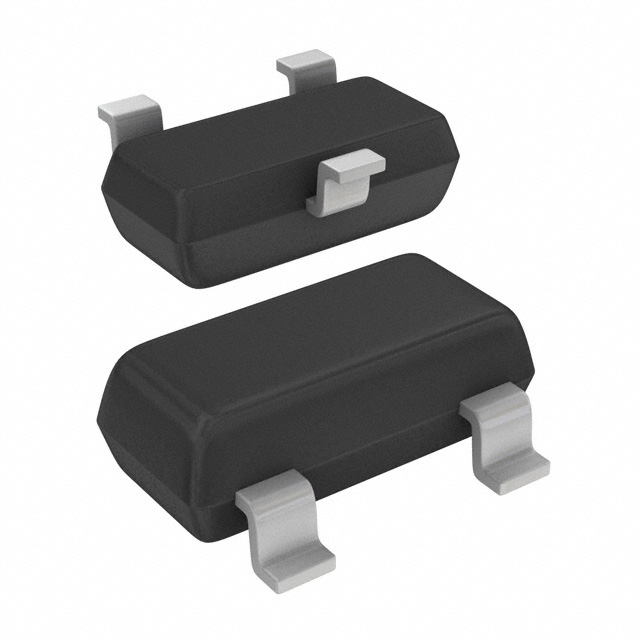
-
BFU550AR
NXP USA Inc.
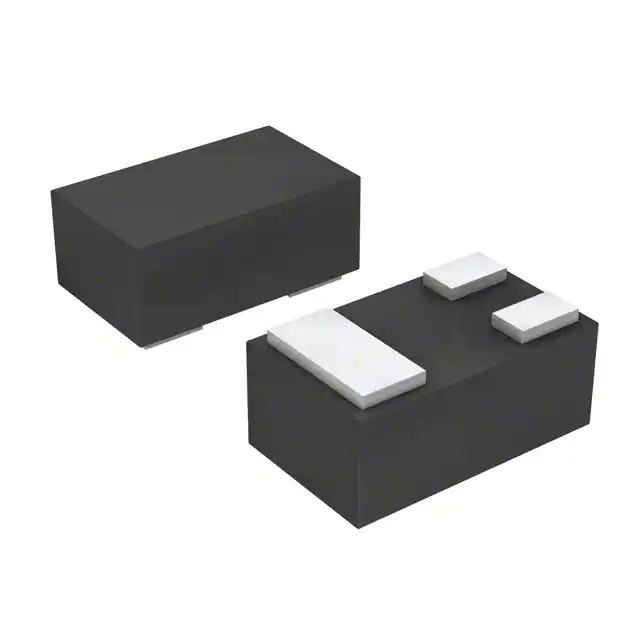
-
BFR460L3E6327XTMA1
Infineon Technologies
-
MMBTH81
onsemi
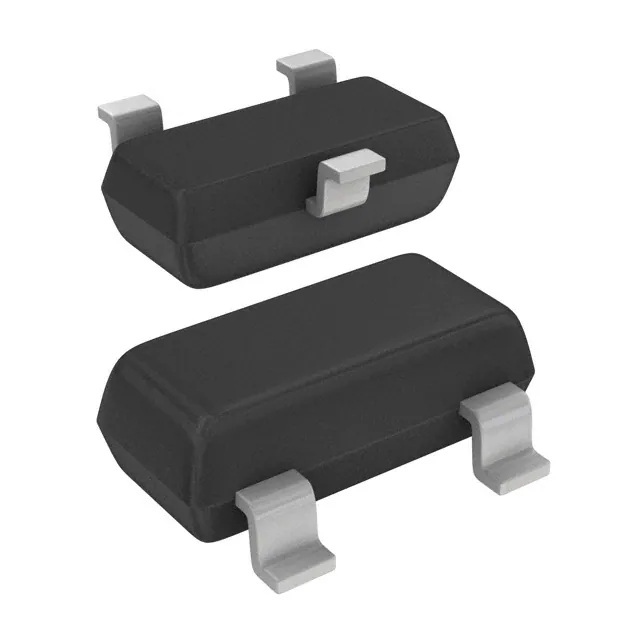
-
BFU520WX
NXP USA Inc.
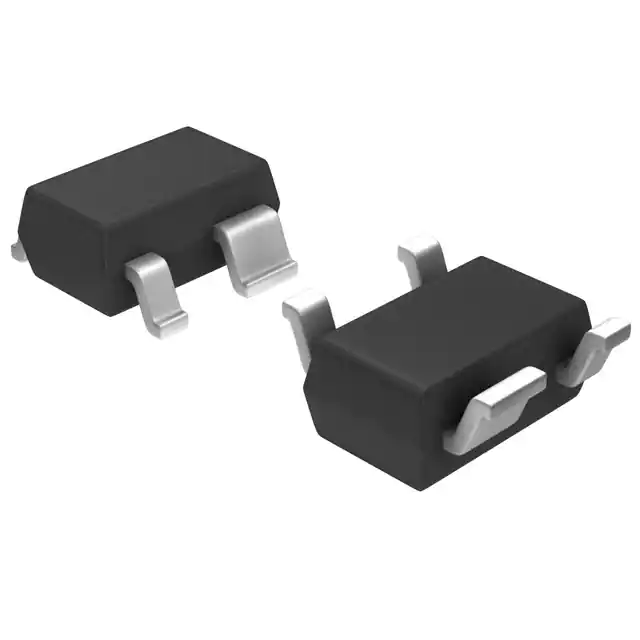
-
BFP840FESDH6327XTSA1
Infineon Technologies
-
BFP650H6327XTSA1
Infineon Technologies
-
BFU520AR
NXP USA Inc.
-
BFS483H6327XTSA1
Infineon Technologies
Tech Hub

Operational amplifier guide covering op amp basics, feedback, ideal vs real op amps, common configurations, buffer circuits, offset, bias current, gain-bandwidth, slew rate, rail-to-rail limits and sel…

Jumper cables guide covering safe connection order, red and black clamp placement, final ground connection, cable gauge, length, clamp quality, copper vs CCA cables, jump starter comparison and battery…

LDO regulator guide covering low dropout voltage, power dissipation, thermal design, PSRR, output noise, capacitor stability, adjustable LDO circuits, LDO vs buck converter and datasheet selection chec…

Conditional Access Module guide covering CAM meaning, CI/CI+ interface, smart card authorization, DVB security workflow, TV and set-top box compatibility, internal electronics, ESD protection, connecto…

Guide to electronic component obsolescence covering EOL risk, PCN/PDN notices, last-time buy planning, replacement options, form-fit-function validation, counterfeit risk and BOM lifecycle management.

18650 battery guide covering lithium-ion cell basics, 3.6V/3.7V voltage, 4.2V charging, mAh and Wh capacity, protected cells, chargers, BMS, series-parallel packs, holders, welding and sourcing checks.…

Hall effect sensor guide covering working principle, linear and digital sensors, Arduino circuits, current sensing, speed detection, automotive applications, A3144 examples, signal filtering and datash…

Product Change Notification guide for electronic components, covering PCN meaning, PCN vs PDN/EOL, common change types, risk levels, form-fit-function review, engineering validation, BOM control, LTB/L…

A practical guide to blend door actuators, covering HVAC function, symptoms, location, AC and heater issues, reset and calibration, replacement cost, electrical diagnosis, compatibility checks, and rep…

Engineering guide to Raspberry Pi alternatives, covering chip-level differences, Orange Pi, ROCK, Jetson, Banana Pi, NanoPi, Compute Module, Pico, GPIO, camera, HAT compatibility, and replacement risks…


